The palm-nut vulture (Gypohierax angolensis) is a unique bird of prey, notable for its primarily vegetarian diet of oil and raffia palm fruits. Found across sub-Saharan Africa, it is the only member of its genus and is also known as the vulturine fish eagle.
Physical characteristics
- Size: As the smallest of the Old World vultures, it measures 55 to 65 cm long, with a wingspan of 1.45 to 1.6 meters and a weight of 1.3 to 1.9 kg.
- Coloration: Adults have striking white plumage with black flight and tail feathers. A distinctive, bare patch of orange-red skin surrounds its eyes. Juveniles are mostly brown with yellowish facial skin and take three to four years to reach maturity.
- Head: Unlike most other vultures, which have bare heads, the palm-nut vulture has a feathered head, giving it a more eagle-like appearance.
Habitat and distribution
- Range: Palm-nut vultures are found in coastal areas and river systems across sub-Saharan Africa, from the Gambia in the west to Kenya in the east, and south to South Africa.
- Habitat: Their distribution is closely linked to the presence of oil and raffia palm trees, which are their main food source. They live in coastal forests, mangroves, and wet savannas near water.
Diet and foraging
- Herbivorous diet: The fleshy fruit husks of oil and raffia palms make up over 60% of an adult’s diet and up to 90% of a juvenile’s diet.

Iconic Marine & Coastal Wildlife
- Sea Turtles: Kosi Bay is a world-renowned nesting site for Loggerhead and Leatherback turtles. From November to February, these ancient mariners come ashore at night to lay eggs.
- Whales: Humpback whales can be seen breaching offshore during their seasonal migration to calve in Mozambique.
- Tropical Fish: Known as the “Aquarium of Africa,” the Kosi Bay mouth teems with over 200 species of tropical fish, including Lionfish, Scorpionfish, and the venomous Stonefish.
- Sharks: The primary shark species found in the Kosi Bay estuary and lake system is the Zambezi or Bull shark (Carcharhinus leucas).They thrive in the shallow, murky waters of the estuary and can travel far into the lake system.
- These sharks are known for their presence in the area where the lakes meet the sea, with documented interactions involving the hunting of young crocodiles.
- Safety: It is not recommended to swim in the lakes due to the presence of sharks and hippos, though the Kosi Bay Mouth (estuary) is considered safer for snorkeling.
- Rays: Honeycomb Stingrays: Often spotted in the shallow, clear waters of the mouth.
- Manta Rays: Occasional visitors to the area, particularly in the deeper offshore waters.
- Diamond Rays: A prize for anglers; specimens as large as 176 cm have been recorded in the area.
- Other Species: The bay also hosts various small rays and skates, which are frequently seen by snorkellers
Lake & Wetland Inhabitants
- Hippos & Crocodiles: The four-lake system is home to approximately 60 hippos and a significant population of Nile crocodiles.
- Aquatic Predators: The ecosystem supports Nile monitors, water mongooses, and even Zambezi sharks (Bull sharks) that cruise the estuary and lower lakes.
Birdlife & Forest Species
- Birding Paradise: Over 250 bird species inhabit the area. It is the best place in South Africa to see the rare Palm-nut Vulture, which feeds on the fruit of the endemic Raffia Palm. Other highlights include the Pel’s Fishing Owl, African Finfoot, and Flamingos.
- Forest Mammals: The surrounding coastal and swamp forests are home to Bushbuck, Duiker, and various monkey species.
Unique Flora & Insects
- Raffia Palms: These forests contain Africa’s largest palm trees and are a critical habitat for specialized wildlife.
- Endemic Butterflies: The area hosts rare species like the Kosi Skipper butterfly, which is endemic to the region.
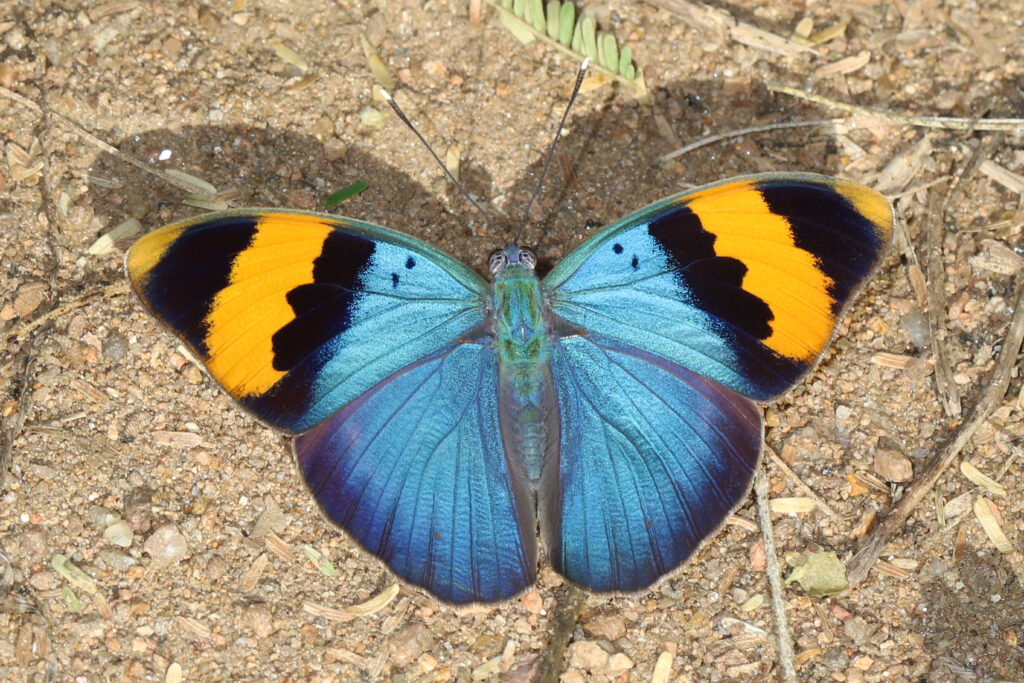
The Gold-banded Forester (Euphaedra neophron) is a vibrant butterfly native to the dense tropical and coastal forests of Eastern and Southern Africa. Known for its striking appearance and elusive nature, it is a member of the Nymphalidae family
- Appearance: Its wings feature a brilliant blue-green or violet base with a broad, distinctive gold/orange subapical band and yellow tips. The underside is typically brown or grey, providing effective camouflage when resting on tree trunks.
- Size: It has a wingspan ranging from 7.6 to 10.2 cm (3.0 to 4.0 inches).
- Diet: Unlike many butterflies that seek nectar, adults primarily feed on rotting fruit and tree sap. This nutrient-rich diet is believed to contribute to their unusual longevity, with some individuals living over 200 days.
- Habitat: They prefer the shaded, low-altitude floors of very dense forests and are rarely seen in open clearings.